May Chironomid Hatch Timing — Reading Water Temperature on Colorado Stillwaters
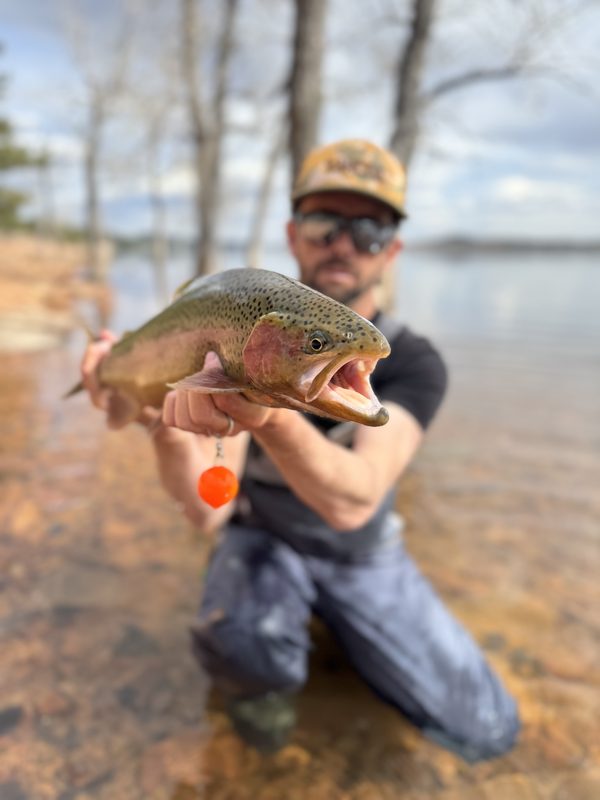
The most common chironomid question I get this time of year is some version of: "when's the hatch?" The honest answer disappoints people — there is no calendar date. Chironomid hatches are temperature-driven, not date-driven. A cold May runs the hatch into June. A warm May (like the one we're in right now in 2026) compresses it into a three-week sprint.
If you want to time the chironomid bite on Colorado stillwaters — Spinney, Eleven Mile, Delaney Buttes, Carter Lake — you stop asking "when" and start asking "what temperature." That single mental shift is the difference between showing up to a dead lake and showing up to feeding fish.
This is the guide-side breakdown of the water temperatures that actually matter, how to measure them without spending money on toys you don't need, and how to read your way to the right window on the lake.
Spinney is hitting these triggers right now: 53.5°F → chironomids on. 54-54.5°F → callibaetis follow. Current Spinney conditions + shore-vs-tube tactics →
The Temperatures That Actually Matter
Here are the four temperature thresholds I run my season around. Memorize them. They apply to almost every Colorado stillwater I fish.
42–47°F — Pre-hatch. Pupae are starting to develop but the column isn't busy yet. Bite is slow. Bloodworms outproduce chironomid pupae. You can catch fish — they're not interested in chironomids specifically. Pupal patterns work as a generic snack, not as a match.
48–54°F — First emergence window. This is when the season starts. Chironomids begin emerging in usable numbers. Hatches are short — an hour or two mid-morning. The fish remember chironomids from last year fast. This is when the first big-fish days of the year happen because the trout are eating with intent and the column isn't crowded with bug life yet.
55–62°F — Peak emergence. The hatch is dense, sustained, and the bite extends. Mornings and afternoons both fish. This is the window that makes Spinney and Eleven Mile famous. Most of my five-pattern stillwater box sees its best days here.
63°F+ — Hatch pushed deep. The emergence is still happening but it's earlier in the day and deeper in the column. Fish drop off the shallows. The morning window narrows to first light. Mid-day fishing slides toward leeches and scuds. Balanced leeches start outproducing chironomids by mid-afternoon.
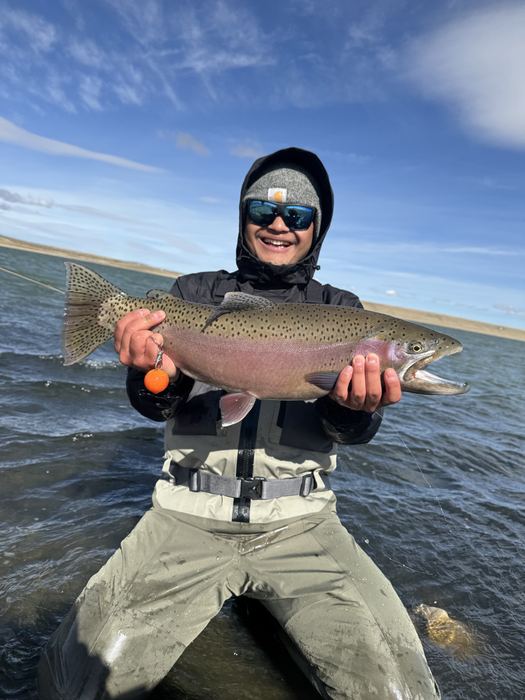
How to Actually Measure Water Temperature on the Lake
I see two extremes in stillwater anglers. The first ignores temperature entirely. The second buys a $200 fish finder and reads the temp readout. Both miss the same thing — what you want is the temperature where your fly is fishing, which is rarely the same as the surface.
The Cheap Setup That Works
An $8 floating fishing thermometer (any sporting goods store) tied to twelve feet of cheap mono. Drop it. Wait 90 seconds. Pull it up. Read it. That's your surface temp.
For deeper readings, the simple move is to leave it down for two minutes at the actual fishing depth. It's not laboratory-precise but the differential between surface and depth is what matters, and the differential is usually 2–6 degrees in a Colorado stillwater in May.
Reading the Differential
The surface-to-depth differential tells you where the fish are. Small differential (under 3°F) means the column is mixed — fish can be anywhere, hatch dynamics dominate. Large differential (5°F+) means there's a thermocline setting up — fish stack on the cool side of it. Find the differential before you set up.
This isn't theoretical. It's how I decide between an 8-foot leader and a 14-foot leader before the first cast. My indicator rig setup guide walks through the leader math.
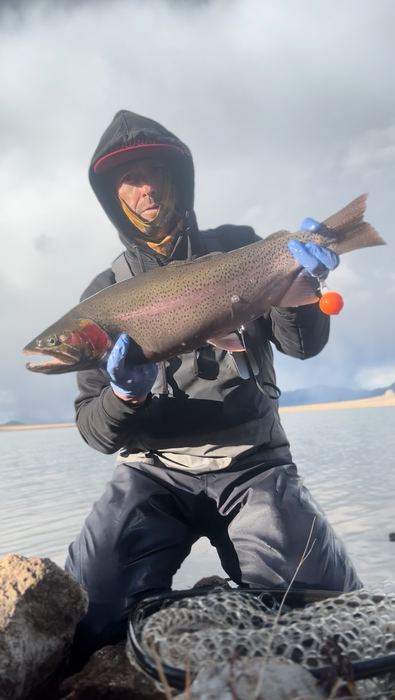
Hatch Timing by Region (Colorado & Wyoming)
The same temperature ranges produce the same behavior across every lake, but the calendar dates they hit on are completely different depending on elevation and basin. Rough rules for a normal-snow year:
Front Range Reservoirs (Carter, Horsetooth, Boyd) — 5,400–5,700 ft
These hit 48°F in late March and 55°F by mid-April. By mid-May they're already in the 60s. The peak window has often passed by the time the South Park lakes are starting. If you're a Front Range angler, treat April–early May as your prime time. Carter and Horsetooth guide for access and tactics.
South Park (Spinney, Eleven Mile, Antero) — 8,500–9,000 ft
The 48°F threshold hits in mid-April to early May. Peak window is mid-May through mid-June. This is the heart of the Colorado stillwater season. Spinney guide, Eleven Mile guide. Antero is closed in 2026 — see the closure post and the replacement playbook.
North Park & Wyoming (Delaney, Lake John, Wyoming Stillwaters) — 8,000–8,500 ft, colder microclimate
The cold microclimate pushes the calendar back another week or two. The hatch window for these lakes typically opens late May and runs into July, with a slower start and longer tail. Delaney/Lake John guide. My Wyoming stillwater field notes covers what an in-window day actually looks like.
One caveat for 2026: with the early warming we've had (see my 2026 drought report), the calendar above has shifted earlier across the board. Front Range is already past peak. South Park is mid-peak right now. North Park is just opening up.
Reading Conditions Beyond the Thermometer
Water temp is the lead variable but it's not the only one. Three other readings I take before I commit to a fishing plan:
Cloud Cover
Overcast days dramatically extend chironomid hatches. The same lake at the same temperature will hatch all day under clouds and finish by 11 AM under bluebird skies. If the forecast says cloudy, plan a longer day on the water and don't burn your energy on an early start. If it's clear, get there at first light and accept that you'll be done by lunch.
Wind
A 5–10 mph breeze concentrates chironomids on the downwind shore and makes for stunning fishing if you can position there. Dead-calm days look pretty but bunch the bugs randomly and force you to chase. A 15+ mph day flattens the hatch — pupae have a harder time reaching the surface, and your indicator becomes a sail. My chironomid playbook has the wind-positioning detail.
Barometric Pressure
Falling pressure ahead of a front juices stillwater bites. Rising pressure on the back side of a front is the worst — the fish go off the eat for a half day even with a good temperature read. I check the barometric trend the night before every trip.
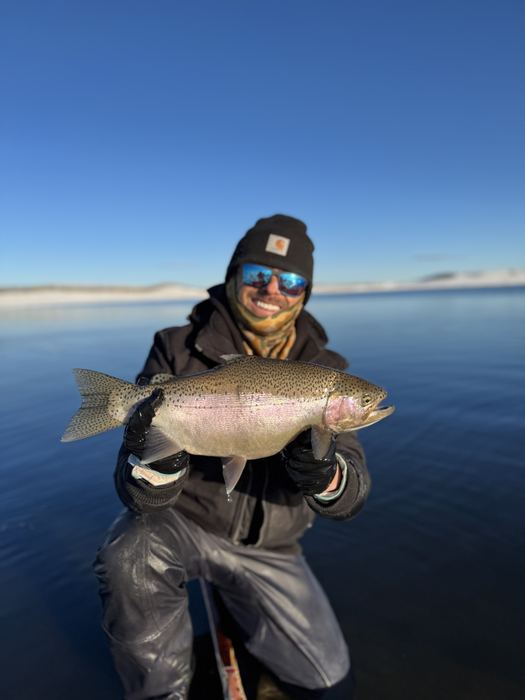
Putting It Together — A Sample Day Plan
Here's the way I run a mid-May Spinney or Eleven Mile day, assuming the water comes back at 53°F surface, 49°F at 12 feet:
Pre-dawn rig: Indicator set for 12 feet — fishing the cool side of the differential. Lead chironomid in size 14, dropper in 16, both proven patterns from my chironomid catalog.
First light (5:45 AM): First drift through a reliable lane. If the indicator goes down in the first ten minutes, the day's on. If not, drop the indicator depth two feet and try again before moving spots.
7:00–10:00 AM: The peak window for a 53°F lake. Fish hard, don't waste time rerigging. Re-check the differential at 9 AM — if the surface temp jumped to 56°F, the hatch window is closing earlier than expected.
10:00 AM–12:00 PM: Surface heating starts to push pupae deeper. Either follow them down or switch to a balanced leech or scud on the dropper.
Afternoon: Either pack it up or fish leeches. On a clear-day, the chironomid window is closed by 1 PM at 60°F+. On a cloudy day, you can keep fishing chironomids through the afternoon and into a second peak around 4–6 PM. Don't make the standard mid-day mistake — recognize the window has closed and adjust.
The Bottom Line
The thermometer is the single best stillwater tool that almost no angler carries. An $8 fishing thermometer answers more questions than a $400 fish finder. The hatch isn't on a calendar — it's on a temperature ramp. Once you read that ramp, the rest of the day's plan falls out of it.
Three things to take from this article:
1. Memorize the four temperature zones. 42–47°F pre-hatch, 48–54°F first emergence, 55–62°F peak, 63°F+ pushed deep.
2. Measure the surface-to-depth differential, not just the surface. That tells you where the fish are stacking.
3. Adjust your day plan from the read, not from the clock. Cloudy 52°F lake fishes differently from sunny 58°F lake. The plan should reflect what the water says.
Want flies built for the exact emergence window you're fishing? My chironomid catalog is hand-tied and tied to order. Want a guide-side read on the lake while you do it? Trip booking lives here.
Tight lines.
Get the Patterns Used in This Article
Every fly mentioned in this guide is hand-tied fresh to order by Thomas Frank. Proven on Colorado's best stillwaters — tied on 2x heavy wire hooks with tungsten beads.
Sharpen the stillwater game
-
The #1 Mistake Stillwater Anglers Make
The one fix that turns a slow lake into a productive one.
-
Spinney Mountain Reservoir — Complete Guide
South Park's flagship stillwater — access, tactics, and the chironomid box.
-
Eleven Mile Reservoir Fly Fishing Guide
Deep water, healthy hatch — the drought-year safe play.
-
Balanced Leeches Under Indicators
The mid-day pivot when the temperature pushes the chironomid hatch down.
Comments