Colorado Drought 2026 & Stillwater Fly Fishing — Reservoir Levels and Best Lakes Right Now
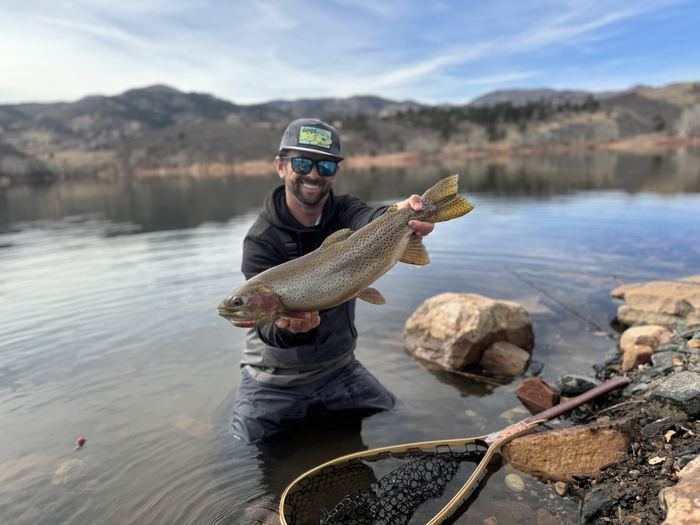
It's the second week of May, and the drought story in Colorado is no longer hypothetical. Snowpack ran below average across most of the basins that feed our stillwaters, runoff peaked early, and Front Range and South Park reservoirs are sitting at storage levels that haven't been this low this early in years. The U.S. Drought Monitor has stretches of the state in moderate to severe drought, and the Bureau of Reclamation reservoir reports back that up.
That's the news. The fishing question — the one I get every week — is more specific: where does a Colorado stillwater fly angler actually go right now, and what changes about how you fish it?
This is a guide-side breakdown. Reservoir by reservoir, what the water's doing, and the tactical adjustments that matter when the lakes get thin.
Why Drought Changes the Stillwater Bite (Not Just the Scenery)
Low water isn't just a cosmetic problem. It changes the way trout use the lake. Three real effects:
1. Fish get concentrated. Less volume means trout pile into the deeper holes and along structure they used to spread out from. That can produce shockingly good fishing for the angler who finds the concentration — and shockingly slow fishing for the angler still working last year's flat. Reading the new bottom contour matters more in a drought year than any other variable.
2. Water warms faster. Shallow lakes hit 60°F weeks earlier than they would in a normal-snow year. That accelerates the chironomid hatch calendar (more on that in my May chironomid hatch timing guide) but it also pushes fish deep sooner, especially mid-day. The morning window gets longer in relative importance.
3. Weed beds shift. The weeds don't just sit at last year's depth — they grow up into the new shallower zone. Scuds and damselfly nymphs come with them. That's actually good news if you know what to do with it.
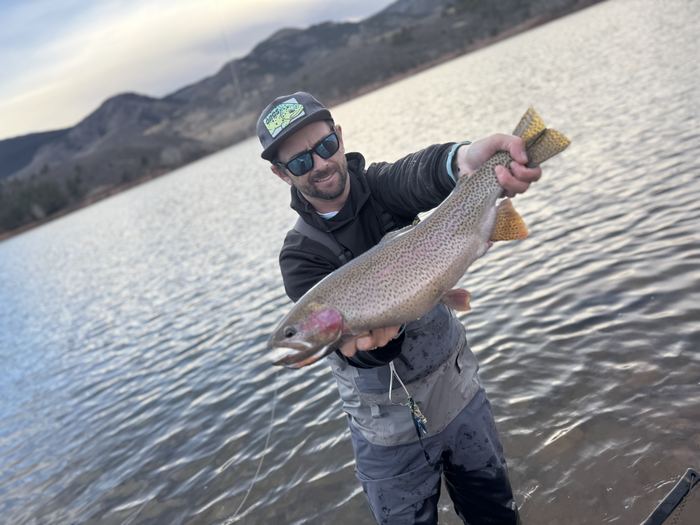
Reservoir-by-Reservoir: What's Fishing in May 2026
Eleven Mile Reservoir — The Drought Workhorse
Eleven Mile is the lake I'm sending people to first this season. It's deep enough that even an off snowpack year leaves usable cold water in the main basin, the trout population is robust, and the chironomid hatch is already well underway. My full Eleven Mile guide lives here, and the playbook is the same one I've run for years — with one drought adjustment: start deeper than you think. The thermocline is setting up earlier this year and the mid-column zone that produced in May 2024 is closer to the bottom in May 2026.
Spinney Mountain Reservoir — Open, Watch the Wind
Spinney opened on schedule and the early reports are solid. It's a shallower fishery than Eleven Mile, so the drought effect is more pronounced — fish are using structure tighter, and afternoons heat up faster than you'd expect for early May. My Spinney guide has the access and tactics rundown. The chironomid box from Antero translates directly — same colors, same sizes, just dial depth more aggressively.
Antero Reservoir — Closed (Plan Accordingly)
Antero is closed for the 2026 season for dam and pipeline work — full context in my Antero closure breakdown. The drought makes the closure sting more because Antero is exactly the kind of fertile shallow water that fishes well even in low years. If Antero was your A-water, my Antero replacement playbook walks through where to redirect by fishing style, not just by drive time.
Delaney Buttes & Lake John (North Park) — A Solid Drought Alternative
North Park caught more snow than South Park this winter, and the Delaney chain plus Lake John is fishing closer to a normal-water year than the Front Range or South Park stillwaters. The drive is longer but the trade is real this year. See my Delaney Buttes and Lake John North Park guide.
Carter Lake & Horsetooth — Front Range Convenience, Drought-Sensitive
Both Front Range reservoirs are pulling hard for municipal supply this year, which means water levels are dropping faster than the calendar would suggest. Carter and Horsetooth still fish, but the windows are tighter — morning is the bite, mid-day is for driving home or tying flies. Worth knowing if you only have a half-day.
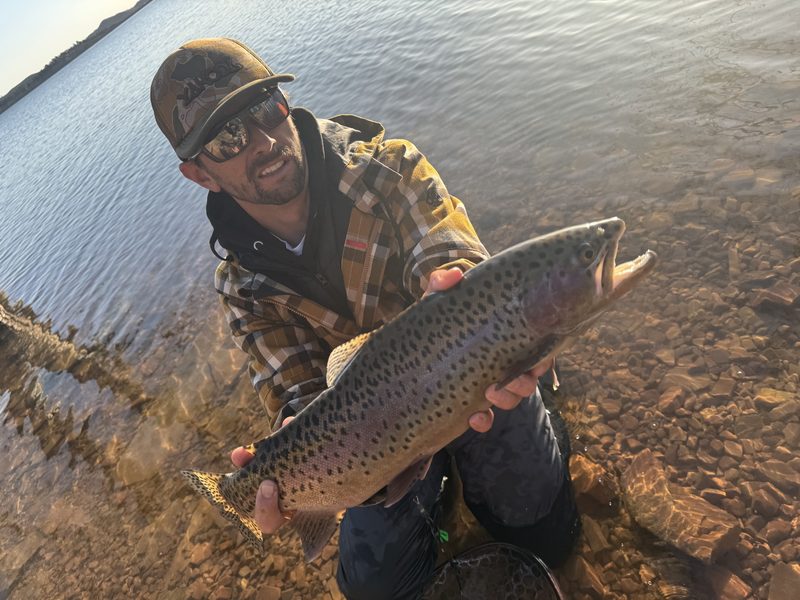
Drought-Year Stillwater Tactics That Actually Move the Needle
The tactical adjustments below are the difference between blanking and crushing it on a low-water Colorado stillwater. None of them are exotic. All of them are things most anglers underdo.
1. Fish Deeper, Sooner
The biggest mistake I see in a drought year is anglers running last year's depth profile. If you fished a 9-foot drop in May 2024, the fish aren't there in May 2026 — they're at 12 or 14. The depth profile shifts with water level, and fish follow the cold. Chironomid depth control is the single most important stillwater skill in any year, and it's even more decisive when the bottom contour has changed under you.
2. Downsize Chironomids
Concentrated fish in clearer water get picky on profile. The chironomid sizes that produced in a normal year — say a #14 — fish smaller in a drought year. I'm starting most days with a #16 and dropping to #18 when the bite slows. Black/silver and chocolate/copper out of my chironomid catalog have been the consistent producers. The five-pattern stillwater box still covers it — just shifted one size smaller.
3. Lean Harder on the Morning Window
The pre-dawn-to-10 AM window matters more than ever this year. Water temperature is the variable; the fish are in the strike zone before mid-day heat pushes them deep and sluggish. Plan the trip around that window instead of treating it as one of three. Your indicator rig should already be tied the night before — no rigging time should burn into the bite window.
4. Add a Scud Rotation
If the chironomid bite slows mid-day (it will), switching the bottom fly to a scud and dropping a foot deeper is the move I'm running this season. Weed beds have moved into the new shallower zone, and the scud population is fishing-table close to the trout that just dropped off the column. Wyoming convinced me on this and Colorado's confirming it.
5. Don't Wade Where You'd Float
This is a small one but it matters. In a drought year, shore access opens up to spots that were under water in a normal year — but the trout are using those zones as their new shallow flats. Wading into them at dawn turns a 200-yard cast of cruising fish into a 200-yard sprint of spooked ones. Shore stillwater work rewards patience over distance in low water.
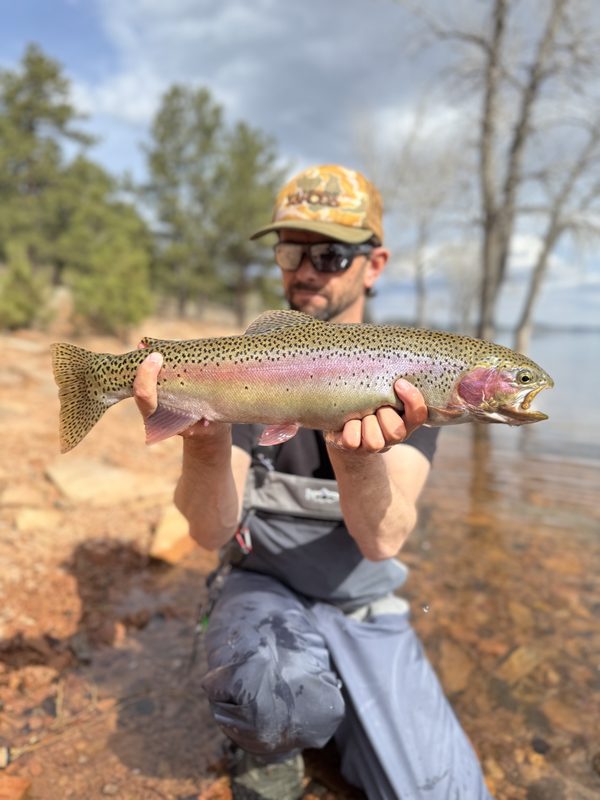
The Honest Drought Forecast for the Rest of the Season
I'm not a hydrologist, but I read the basin reports the same way every other guide does, and the late-May to August read isn't optimistic. Reservoir storage is already behind the curve; without a heroic monsoon, the deeper lakes will fish well through July, the shallower ones will be tough by late June, and South Park is going to need cool nights to keep producing through August.
The practical move: front-load your stillwater trips. May and early June are the strongest windows of the season this year. By late summer, the call will shift more toward tailwaters and high-country lakes that don't depend on reservoir storage. If you've been thinking about a guided stillwater day, the next four weeks are the high-percentage time to book it.
What I'm Telling Clients This Week
Three lines I've repeated on the phone five times in the last week:
Eleven Mile is the safe play. Deep water, healthy hatch, the bite holds even with the drought. Full guide.
Don't sleep on North Park. The drive matters less than the bite when South Park is heating up too fast. North Park breakdown.
Smaller, deeper, earlier. Three adjustments. Smaller chironomids, deeper than last year, earlier in the day. That's the drought-year playbook in three words.
The Bottom Line
Drought years are hard on the fishery and hard on the people who care about it. They're not over for the angler who's willing to read conditions and adjust. The fish are still eating. They're just eating differently — in different parts of the lake, at different depths, in narrower windows. The anglers who run last year's plan will blank. The ones who put a thermometer in the water and a smaller chironomid on the dropper will land them.
If you want help dialing this in on the water — or you want flies built for current conditions in your hand before your next trip — both halves of my operation are open. Trip booking is here; the chironomid catalog is here. Either way, fish smart this season.
Tight lines.
Get the Patterns Used in This Article
Every fly mentioned in this guide is hand-tied fresh to order by Thomas Frank. Proven on Colorado's best stillwaters — tied on 2x heavy wire hooks with tungsten beads.
Where to fish & how to fish it this season
-
Spinney Mountain Reservoir — Complete Stillwater Guide
Access, tactics, and the chironomid box that produces in South Park.
-
Carter Lake & Horsetooth — Front Range Stillwater Guide
Front Range convenience — fishing the morning window when water levels are dropping.
-
Indicator Rig Setup for Colorado Lakes
Leader length, tippet, and fly selection — built before dawn, fished at first light.
-
The #1 Mistake Stillwater Anglers Make
The one fix that turns a slow drought day into a productive one.
Comments